
Reviewed · NEIGHBOR ISLAND DAY TRIPS FROM OAHU
Hawaii Volcanoes National Park Experience from Oahu
The day’s big reward is Hawaii Volcanoes National Park, where you can walk through a lava tube, peer into Kīlauea’s crater, and feel heat rising from steam vents. The trip also gives you a quick but satisfying look at the Big Island’s southern side, from Kona coffee to black sand and sea turtles.
I like that round-trip airfare from Honolulu to Kona is included, along with airport pickup and a vehicle for the long island loop. I also like the guides’ local knowledge. Henry, Mel, and Mike are repeatedly singled out for clear stories about volcanoes, Hawaiian culture, and island life.
The tradeoff is simple: this is a long day with plenty of road time. You may spend several hours in the vehicle, and lunch at Punaluʻu Bake Shop can become crowded and slow. Bring snacks so you are not depending on one busy stop.
Key details before you book
- See the Big Island in one demanding day: You cover Kona, the southern coast, and Hawaii Volcanoes National Park after flying over from Oahu.
- The volcano park gets the most time: The main park visit lasts about two hours and includes the visitor center, Halemaʻumaʻu Crater area, Kīlauea Iki Rainforest Lookout, Thurston Lava Tube, and steam vents.
- The coffee stop is a real part of the day: Greenwell Farms offers a brief introduction to Kona coffee, with samples and farm context.
- Black sand and sea turtles are a highlight: Punaluʻu gives you a striking volcanic shoreline and a chance to see Hawaiian green sea turtles resting on the beach.
- Guides make the difference: Henry, Mel, and Mike are known for lively explanations of geology, Hawaiian culture, and local stories.
- Pack for quick weather changes: Bring a rain jacket, layers, water, snacks, sunscreen, a hat, and sturdy closed-toe shoes.
Why this Oahu day trip works
The Big Island is much larger and less compact than Oahu. Flying over for one day can feel ambitious, but it solves a real problem: you can see the island’s most famous volcanic area without changing hotels or arranging a rental car.
The tour begins at Kona International Airport at 8 a.m. If you are flying over from Honolulu, your round-trip airfare is included. If you are already on the Big Island, you meet at the lot behind Alaska Baggage Claim B-2 at Kona Airport. Transportation to Honolulu Airport is not included, so build that cost and travel time into your budget.
The experience is described as private and customized, though the maximum group size is 22. That means you should not assume a fully private car for only your party. The practical benefit is a guided vehicle rather than a self-drive day, with someone else handling the long roads, airport timing, and route.
The price is $589.99 per person. That is a serious charge for a day trip, but the airfare matters. You are also paying for an air-conditioned vehicle, park admission, airport pickup, and a guide who can explain what you are seeing. If you tried to arrange flights, a rental car, fuel, park entry, and a full day of driving separately, the difference might be smaller than it first appears.
More neighbor island day trips from Oahu:
- Hawaii Volcanoes National Park Experience Departing from Oahu
★ 5.0 · 240 reviews - One Day Heavenly Hana Tour: Island Hopping from Oahu to Maui
★ 4.5 · 17 reviews - Oahu to Big Island Volcanoes National Park Adventure Tour
★ 4.1 · 8 reviews
Greenwell Farms and the Kona coffee story
Greenwell Farms is a sensible first stop because Kona coffee is one of the Big Island’s signature products. The farm dates to 1850 and sits on the slopes of Mauna Loa, where volcanic soil, sunny mornings, afternoon cloud cover, and regular rain create good growing conditions.
You get about 30 minutes here, and admission is included. That is enough time for a short farm introduction and a taste of the local coffee experience, but not enough for a slow agricultural tour. If you are serious about coffee, the stop may feel brief. If you simply want to understand why Kona coffee costs more than ordinary supermarket coffee, it does the job.
I would treat this as a useful orientation rather than the day’s main event. The coffee is a nice early boost, and the farm gives you a clear connection between the island’s geology and its crops. The volcanic ground is not just scenery. It helps shape what can be grown here.
Manuka State Wayside Park slows the pace
Manuka State Wayside Park is a quieter stop along Highway 11. The 13-acre park includes wet and dry forest, picnic areas, interpretive signs, and the two-mile Manuka Nature Trail.
The tour allows about 30 minutes, so you will not complete the full trail at a relaxed pace. You can still stretch your legs, look at native plants, and get a break from the vehicle. This is one of the more modest stops, but that can be welcome on a packed schedule.
The park also gives your guide room to explain native Hawaiian plants, local ecology, and volcanic features. Keep your expectations in check. You are getting a short nature stop, not a full hike. Wear proper shoes if you plan to walk beyond the immediate picnic area.
Punaluʻu Bake Shop is both lunch stop and local flavor
Punaluʻu Bake Shop sits in Naʻālehu and is known as the southernmost bakery in the United States. It is especially associated with Hawaiian sweet bread, including taro, guava, and mango flavors.
The usual stop lasts around 30 minutes, and lunch is at your own expense. Available food includes sourdough sandwiches, Kalbi beef, Hawaiian plate lunches, baked goods, and local treats. Bring cash because roadside shops and food stands may not accept cards.
This stop has a practical weakness. When several vehicles arrive at once, the bakery can become overloaded. Lines may cut into your time, and the choice of food may be less relaxed than you expect. I recommend carrying a sandwich, fruit, or snack of your own. You can still buy sweet bread or a local treat without making the bakery responsible for your entire lunch.
The stop is valuable because it is not just a scenic pullout. You get a taste of the southern part of the island and a chance to buy something made locally. Just do not arrive hungry with no backup plan.
Same island, a completely different sort of day:
- Oahu Grand Circle Island and Haleiwa Tour: 9-Hr Deluxe Experience
★ 5.0 · 17,387 reviews - Oahu: Grand Tour Around Island 16 Locations plus Snorkeling
★ 5.0 · 8,669 reviews - Salute to Pearl Harbor Including USS Arizona
★ 4.5 · 7,433 reviews - Majestic Circle Island Tour with Lunch
★ 5.0 · 7,014 reviews
Punaluʻu Black Sand Beach and the chance to see turtles
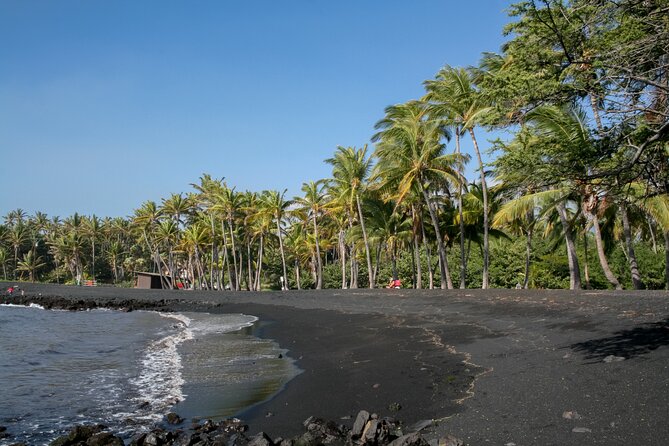
Punaluʻu Black Sand Beach is one of the most memorable stops. Waves have broken volcanic basalt into dark sand, creating a shoreline that looks very different from the pale beaches associated with Hawaii.
Coconut palms frame the beach, and Hawaiian green sea turtles may rest on the shore. Seeing turtles is not guaranteed, but it can be the emotional high point of the coastal portion of the day. Give them space and do not touch or disturb them.
The water can be rough, so this is mainly a viewing and photography stop rather than a swimming beach. You get about 30 minutes, which is enough to see the shore, look for turtles, and take in the volcanic setting. The dark sand can also retain heat, so sunscreen, a hat, and sensible footwear help.
This stop earns its place because it connects two sides of the island at once: the force of volcanoes and the living coastal world that has adapted around them.
Hawaii Volcanoes National Park is the main event
You spend about two hours in Hawaii Volcanoes National Park, with admission included. That is not enough to explore the whole park, but it can cover the essential sights with a strong guide and a well-planned route.
Start at the visitor center, where you can get basic context on volcanic activity and the park’s history. This is where a good guide matters. Instead of simply pointing at a crater, Mel or Henry may explain how eruptions reshape the island and how Hawaiian culture understands these places.
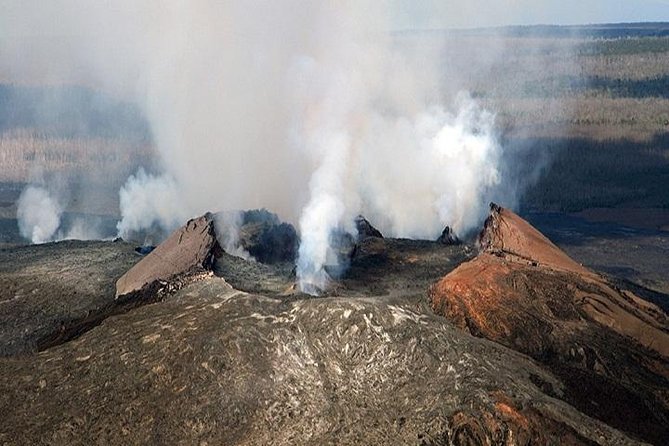
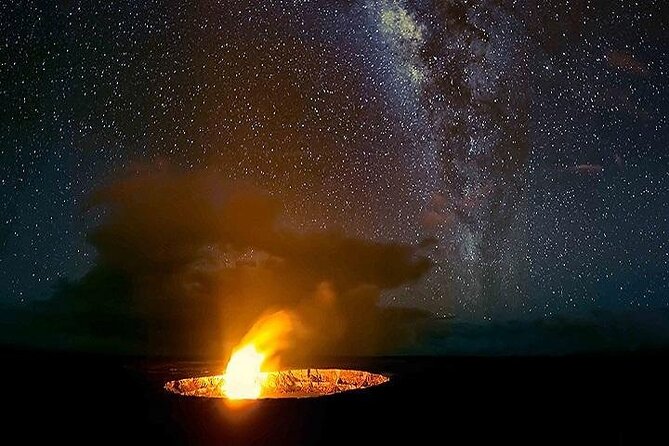
At Halemaʻumaʻu Crater, conditions change over time. The park can sometimes offer views of an active glow or eruption, but you should never book this tour expecting visible lava. One group happened to see an eruption and described it as a once-in-a-lifetime moment. Another visited when no actual lava was visible and still found the crater and surrounding volcanic features worthwhile.
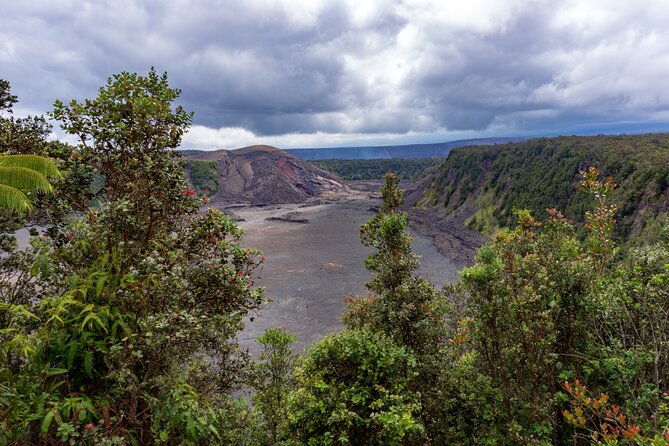
Next comes the Kīlauea Iki Rainforest Lookout. Here, thick forest contrasts with a broad crater formed by an earlier eruption. The view helps you understand the scale of the volcano better than a photograph alone. A trail crosses the crater, but the available tour time may not allow a full hike.
Thurston Lava Tube is another favorite. This natural tunnel formed when the outside of a lava flow cooled while molten material continued moving beneath it. Walking through the tube gives you a direct sense of how a volcanic eruption can create something solid, hollow, and walkable.
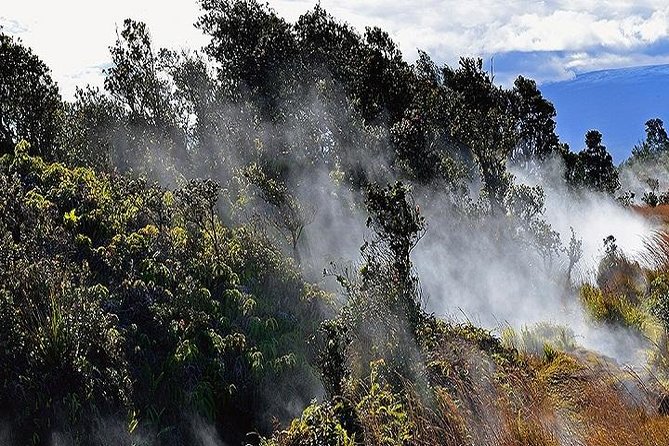
Steam vents provide a final reminder that the ground is still active. You may feel warmth rising from cracks in the earth, but volcanic gases can be harmful. If you have asthma or another respiratory condition, ask about current conditions and follow park guidance closely.
The park contains culturally important Native Hawaiian sites. Stay on marked paths, take nothing, and treat the area with care. This is not just a collection of dramatic views. It is a place with spiritual and cultural meaning.
The road time is part of the experience
This tour moves across a broad section of the island. You begin in Kona, head through the southern part of the island, and spend the central portion of the day around the volcano park. You may also pass areas associated with Mauna Kea, the Kohala Coast, and Hilo.
Mauna Kea Access Road rises from Saddle Road through changing climate zones toward the summit of Hawaii’s tallest volcano. The tour information does not promise a summit visit, so think of this as part of the wider island setting rather than a separate stop.
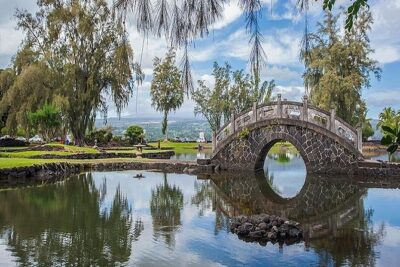
The Kohala Coast is known for drier weather, beaches, resorts, and views. Hilo offers a different character, with places such as Liliuokalani Gardens, the Pacific Tsunami Museum, the Lyman Museum, the historic district, and the Hilo Farmers Market. Again, these are part of the wider route context, not guaranteed individual visits.
You should expect lots of time in the van. That is the price of seeing this much of the island in one day. A guide can make the miles worthwhile by filling them with stories, but anyone who dislikes long drives may find the schedule tiring.
Guides, group feel, and the human side
The strongest part of this experience is the guide. Mel is praised for explaining volcano science, Hawaiian history, and local culture in a way that keeps the day moving. Henry is also known for island stories and clear explanations. Mike appears in the company’s communication and may handle airport or tour duties.
Guiding styles differ. One account described a military background and a strict approach to timing and group care. Some people will appreciate that structure, especially on a day involving flights and several stops. Others may prefer a softer, more relaxed manner.
Late arrivals can cause real trouble on a schedule this tight. A delayed flight, road construction, or a slow lunch line may force the guide to shorten a stop. The day works best when everyone returns to the vehicle on time.
The tour is offered in English. Most people can participate, service animals are allowed, and car seats are available for children age four and under. Cell service may be limited or absent in parts of the park, so download maps or information before leaving.
What to pack for the volcano day
Weather can shift quickly, especially at higher elevations. Bring:
- A light rain jacket and warm layer
- Closed-toe shoes with good soles
- Water and snacks
- Sunscreen and a hat
- Cash for food stands and small shops
- Any medication you may need away from town
Do not wear flip-flops for the lava tube, forest paths, or volcanic ground. Sharp rock and uneven surfaces are part of the setting.
If you have a respiratory condition, pay attention to volcanic gas advisories. Stay on marked trails and follow the guide’s instructions. Also follow Leave No Trace principles by carrying out all trash.
Is the $589.99 price fair?
For a single day, $589.99 is expensive. The value depends on what you are comparing it with. This price includes flights from Honolulu to Kona, park admission, an air-conditioned vehicle, airport pickup on the Big Island, and a local guide.
You are also buying convenience. You do not need to arrange a rental car, navigate unfamiliar roads, or spend your Oahu vacation changing hotels. If Hawaii Volcanoes National Park is a major goal, that convenience can be worth a lot.
The price is less attractive if you want a slow visit, a long hike, or time at every stop. The bakery, coffee farm, beach, and park all receive short visits, and the road miles take up much of the day. You are choosing range and efficiency over depth.
Free cancellation is available up to 24 hours before the start time. Cancellations within 24 hours are not refunded. Poor weather or failure to meet the minimum number of participants can lead to a different date or a full refund.
Should you book this Big Island day trip?
Book it if you have one day for the Big Island, want Hawaii Volcanoes National Park without renting a car, and value a guide who can explain what you are seeing. It is especially useful for a first visit, families, and anyone who wants coffee, black sand, sea turtles, and volcanic sites in one organized day.
Skip it if you dislike long vehicle rides, need a leisurely lunch, or want to hike extensively in the park. The best way to enjoy it is to accept the day’s rhythm, pack food and layers, and treat the drive as part of the island experience.
For the right person, this is a practical way to turn a costly day into a full Big Island sampler. Just keep your expectations realistic: you may see an eruption, or you may see only the evidence of past eruptions. Either way, the lava tube, crater views, steam vents, and black sand beach give you a memorable look at an island still being shaped by fire.
FAQ
Is airfare from Oahu included?
Yes. Round-trip airfare from Honolulu International Airport to Kona International Airport is included in the tour price.
Is transportation to Honolulu Airport included?
No. You must arrange and pay for transportation to Honolulu Airport yourself.
Where do I meet the tour at Kona Airport?
Meet at the lot behind Alaska Baggage Claim B-2 at Kona International Airport.
What time does the experience begin?
The stated start time is 8 a.m. at Kona International Airport.
How long does the tour last?
The experience lasts approximately eight to ten hours.
Is Hawaii Volcanoes National Park admission included?
Yes. Admission to Hawaii Volcanoes National Park is included.
Are meals included?
No. Meals are at your own expense. The tour stops at Punaluʻu Bake Shop, where you can buy sandwiches, Hawaiian plate lunches, baked goods, and other food.
Can I expect to see flowing lava?
No sighting is guaranteed. Volcanic activity changes, so you may see a glow or eruption, or you may see craters, lava formations, steam vents, and other volcanic features without active lava.
What happens if the tour is canceled because of weather?
You will be offered a different date or a full refund if poor weather causes the cancellation.
Newest Honolulu write-ups
- Waikiki: Turtle Canyon Snorkel Tour with Small Group★ 3.4 · 5 reviews
- Waikiki: Surf Lessons Easy 60 min classes no crowds!★ 4.9 · 21 reviews
- Waikiki: Snorkeling & Ocean Playground Experience★ 4.4 · 57 reviews
- Waikiki: Waikiki Night Marchers Ghostly Walking Tour★ 4.9 · 6 reviews
- Waikiki: Sunset Swim & Sailing Experience★ 4.5 · 3 reviews
- Waikiki: Rock-A-Hula Show Ticket and Buffet Option★ 4.5 · 51 reviews
- Waikiki: Sea Turtle Snorkeling, Small Group Boat Tour★ 5.0 · 14 reviews
- Waikiki: Family, Private, and Group Surfing Lessons★ 5.0 · 4 reviews
Neighbor Island Day Trips from Oahu, compared.
Hawaii Volcanoes National Park Experience Departing from Oahu
Read our review →
One Day Heavenly Hana Tour: Island Hopping from Oahu to Maui
Read our review →
Oahu to Big Island Volcanoes National Park Adventure Tour
Read our review →
One-Day Tour Hawaii Movie Tour: Island Hopping from Oahu to Kauai
Read our review →Browse the lists this tour appears in