
Reviewed · WAIKIKI SURF LESSONS
Oahu: Surf Lesson
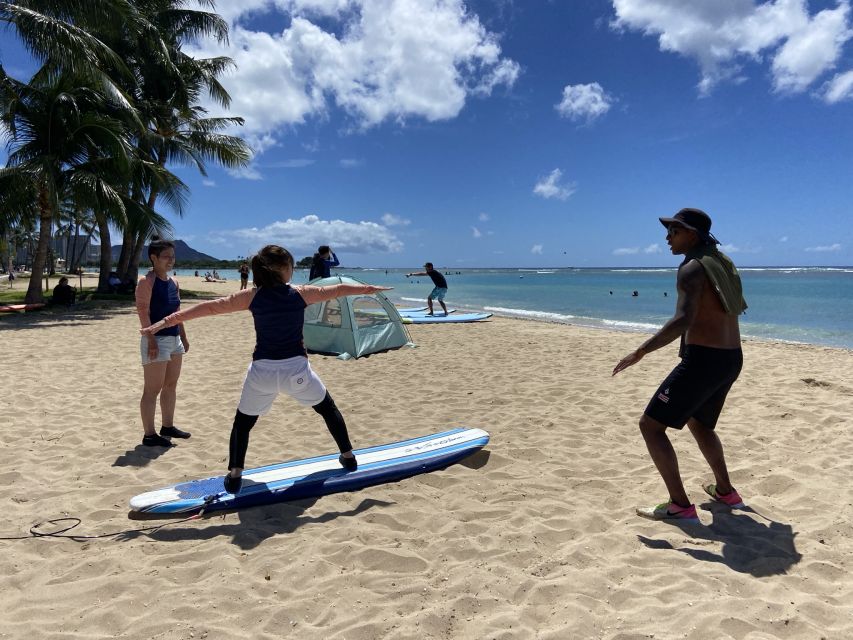
The best feature here is the two-students-to-one-instructor ratio. You get more than a quick group briefing before being sent into the water. The lesson takes place near the north end of Ala Moana Beach Park, away from the heavier Waikiki surf-school crowd, with an hour reserved for actual surfing.
I like the included GoPro footage, which gives you something more lasting than a wet swimsuit and a tired smile. I also like that boards, leashes, rashguards, and reef shoes are included, so you do not need to build a surfing kit before your first lesson. The main drawback is the physical demand: this is not suitable for non-swimmers, people with low fitness, or anyone over 230 pounds.
Key points to know before you book
- Two students per instructor: You receive close coaching instead of standing in a large line waiting for help.
- One full hour in the water: The 90-minute outing includes a beach lesson followed by a substantial surfing session.
- North end of Ala Moana Beach Park: You surf away from the main Waikiki crowd, at a meeting point near the volleyball courts and showers.
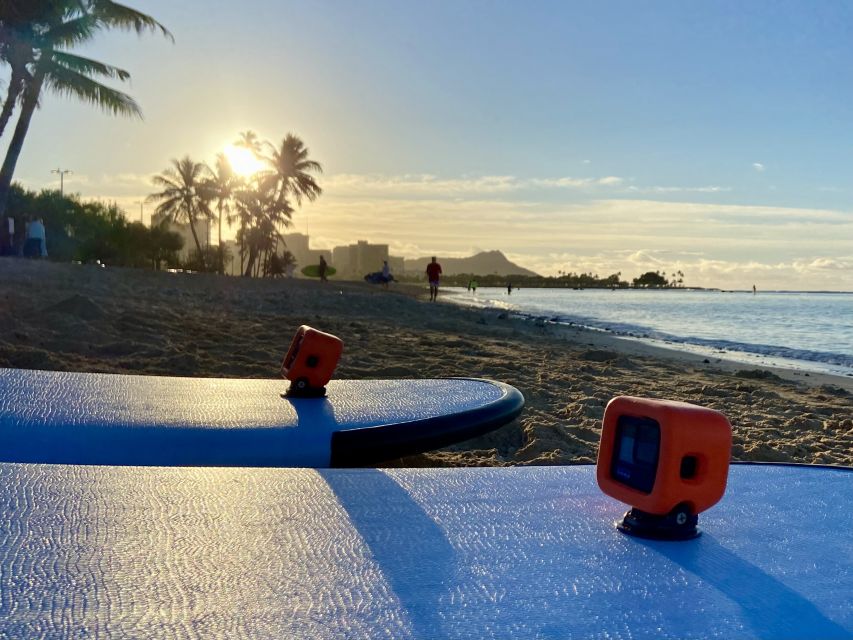
- GoPro cameras included: Your rides can be recorded and shared after the lesson.
- Equipment is supplied: Boards, leashes, rashguards, and reef shoes are part of the price.
- Three teaching languages: Instruction is available in English, Japanese, and Korean.
Why the small group matters in the water
Surf lessons can be frustrating when one instructor is trying to watch a dozen beginners at once. This outing limits the group to five participants and advertises a two-students-to-one-instructor setup. That gives you a better chance of receiving useful corrections on paddling, foot placement, and balance.
For a first lesson, that personal attention matters. Standing on a surfboard is not just a matter of strength. You need to paddle at the right time, move your feet into a stable position, and keep your balance while the board is moving beneath you. A close instructor can help you adjust each part instead of offering only general advice.
The group may include both first-timers and people refining basic skills. The lesson is designed to serve both. If you already know how to stand but struggle with paddling or timing, tell the instructor what you want to improve. If this is your first attempt, focus on the basics and let the instructor set a safe pace.
The group size is limited to five, but the two-to-one teaching ratio is the more important detail. Ask about that ratio when you arrive if the group is not evenly matched. The supplied information describes the ratio as a key feature, while the overall group limit is five people.
More surf lessons in Waikiki:
- Kayak, Snorkel, and Surf with Turtles in Honolulu
★ 5.0 · 95 reviews - Private Surf Lessons in Honolulu
★ 5.0 · 76 reviews - Waikiki Beach: Surf Lessons
★ 4.9 · 73 reviews
Starting at Ala Moana Beach Park
Your meeting point is at the north end of Ala Moana Beach Park, near the volleyball courts and showers. This is a practical location because the landmark is clear, but give yourself enough time to find the correct part of the park. Ala Moana is a large public beach park, and simply arriving somewhere in the park may not put you beside the instructor.
You should arrive ready for a beach activity. The operator provides the main surfing gear, including the board, leash, rashguard, and reef shoes. You do not need to rent those items separately, which keeps the $125 price easier to judge.
The location also shapes the feel of the outing. This is not presented as a lesson in the middle of Waikiki’s busiest beach zone. Surfing near Ala Moana offers a less crowded alternative, which can be helpful when you are still learning where to sit, how to handle your board, and how to move safely around other surfers.
There is no promise of perfect weather or a private beach. The activity runs rain or shine, so plan for a wet day even if the forecast looks uncertain. Your comfort may depend more on your attitude than on sunshine.
The beach lesson: paddling, balance, and safety
The first part takes place on the beach. This review of the basics is short, but it covers the skills you need before entering the water.
You learn how to paddle efficiently and how to get into position. Beginners often waste energy by paddling with poor form or by trying to catch waves from the wrong place. A short land lesson gives you a chance to understand the movement before the board begins shifting under you.
Standing up is the next major task. You work on foot placement and balance, the two pieces that determine whether you land on the board or slide back into the water. A useful lesson should make this feel like a sequence of movements rather than a frantic jump. Listen closely to the instructor’s timing cues.
Water safety is also covered. This includes how to navigate waves and how to respect the ocean. That part deserves as much attention as the standing technique. Surfing is shared with other people, and a safe beginner knows how to handle the board, where to move, and when not to paddle into a wave.
Do not treat the beach briefing as a formality. It is the part that lets you use the water time well. If you are nervous, ask questions here, before you are balancing on a moving board.
One hour of surfing, not just a quick introduction
After the beach review, you spend one hour surfing. For a 90-minute activity, that is a solid amount of water time. Many introductory lessons can feel too short once instructions, equipment, and waiting are counted. Here, the scheduled hour in the water gives you repeated chances to try the movements.
You should expect a mix of attempts. Some rides may end quickly. That is normal for a first lesson, and it does not mean the instruction has failed. Paddling, timing, standing, and balance all have to line up. The value of the lesson is in getting several chances to practice with an instructor nearby.
I like the balance between instruction and activity. You are not paying $125 simply to hear a talk on the beach, and you are not being pushed into the water without preparation. The beach review gives structure, while the hour of surfing lets you work on the skills in real conditions.
The water portion may be tiring. Paddling uses your shoulders and arms, while repeatedly getting back on the board takes effort. This is why the experience excludes people with low fitness and non-swimmers. You need to be comfortable in the ocean and able to manage a physically active session.
People prone to seasickness should also take the warning seriously. A surfboard moves constantly, and repeated exposure to waves can make some people feel ill. If you know you are sensitive, this may not be the right activity for you.
More classes and workshops in Honolulu:
- Oahu: Waikiki Beginner Private Surf Lesson- Female Guide
★ 4.9 · 40 reviews - Waikiki: Surf Lessons Easy 60 min classes no crowds!
★ 4.9 · 21 reviews - Oahu: 1-on-1 Surfing Lesson in Waikiki
★ 5.0 · 5 reviews - Honolulu: SUP (Standup Paddleboard) Yoga Class
★ 5.0 · 5 reviews
GoPro footage adds real value
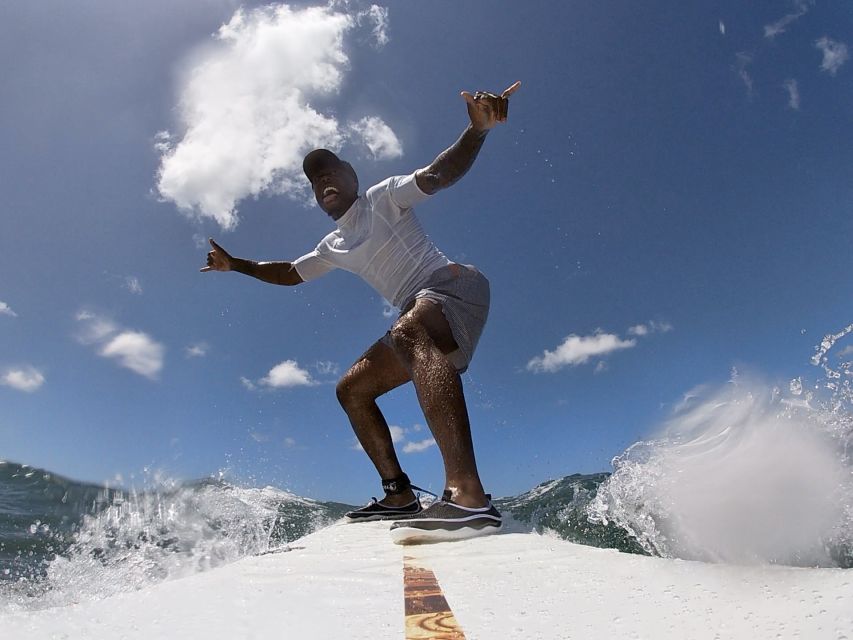
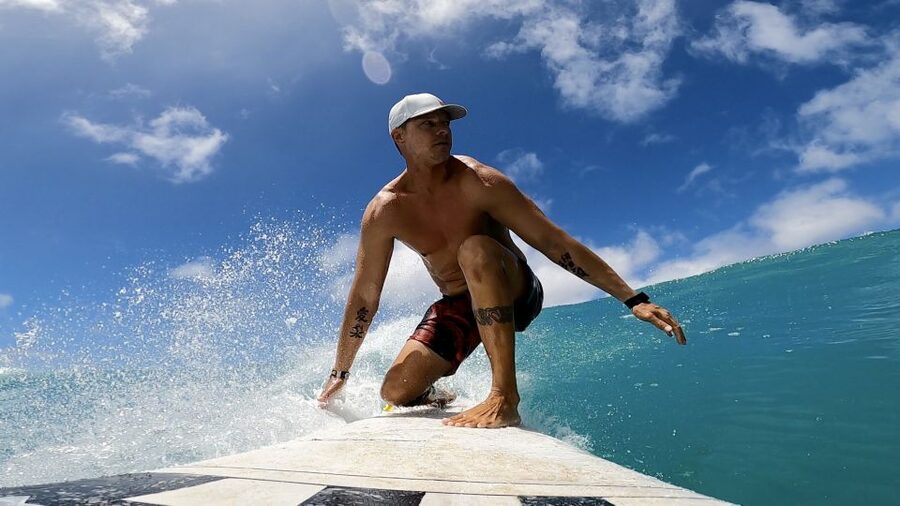
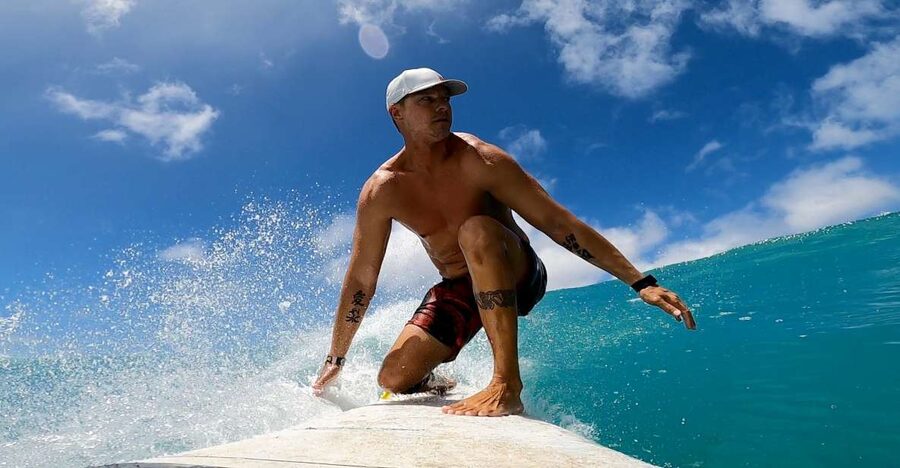
The included GoPro camera is one of the strongest reasons to choose this lesson over a cheaper basic class. Surfing is hard to remember accurately from water level. You may feel as if you stood up for a long ride, only to discover later that it lasted a few seconds. Video gives you a clearer record of what happened.
It also helps you see what to improve. You may notice your feet were too close together, your body leaned too far forward, or your paddling position was not stable. That makes the footage useful beyond social media.
The GoPro is also a practical souvenir. You leave Hawaii with a record of the activity itself, not only beach photos taken from shore. The supplied feedback gives special emphasis to the footage, and I can see why. For a beginner, catching a ride is an event worth saving.
Still, do not book this solely for a polished film. The main service is the lesson. The camera is an extra benefit, and the number or quality of clips is not specified. Think of it as a valuable record of your session rather than a professionally edited video package.
What the $125 price includes
At $125 per person, the cost is higher than a bare-bones beach rental, but this is not just board hire. The price includes a 90-minute lesson, an instructor, a small group, surfboards, leashes, rashguards, reef shoes, and GoPro cameras.
The equipment savings matter. Renting each item separately can make a low advertised lesson price less useful. Here, the board and safety gear are already arranged, and you do not need to purchase a rashguard or reef shoes for one morning.
The small group also supports the price. Personal coaching is the part that changes a lesson from a general introduction into something more useful. If your priority is simply to stand on a board once, a cheaper group option might be enough. If you want direct help with technique and a video record, the price is easier to justify.
You can reserve now and pay later, which is useful when your Hawaii schedule is still changing. Free cancellation is available up to 24 hours in advance for a full refund. Since the activity runs rain or shine, check the forecast and your own energy level before the cancellation deadline passes.
Who will enjoy this lesson most
This outing fits beginners who can swim, handle moderate physical effort, and want a guided first try. It also suits a person who has tried surfing before and wants help with the basics rather than an advanced performance clinic.
The language choice is another practical advantage. Instruction is offered in English, Japanese, and Korean. That can make safety information and technical corrections easier to follow, especially when you are learning a sport with unfamiliar movements.
The lesson is not suitable for children under 10, pregnant women, people with mobility impairments, non-swimmers, people prone to seasickness, people over 230 pounds, or people with low fitness. These restrictions are not minor footnotes. Surfing requires you to manage your body, board, and waves at the same time.
You should also be comfortable with the fact that conditions may not be bright or dry. The lesson takes place rain or shine. If you want a weather-dependent beach activity that you can cancel at the last moment, this may feel too inflexible.
Practical preparation for the 90-minute session
Wear something suitable for getting wet and bring any personal items you need for the beach. The provider supplies rashguards and reef shoes, but the available information does not specify towels, storage, or changing arrangements, so avoid assuming those are included.
Use the volleyball courts and showers as your meeting landmarks. The exact meeting area is at the north end of Ala Moana Beach Park. Arrive with enough time to locate it without rushing, especially if you are unfamiliar with the park.
Pay attention during the beach review and conserve your energy. You may be tempted to paddle hard on every attempt, but good technique matters more than brute force. Let the instructor correct your position, and ask for help if you are unsure how to handle your board.
The activity is limited to five people, but the duration is fixed at 90 minutes. That means late arrival cuts into your own lesson time. The supplied details do not promise transportation, so plan to reach the meeting point on your own.
My recommendation for booking
I recommend this surf lesson if you want a focused introduction with a small group, a full hour in the water, and recorded footage of the experience. The strongest combination is the close coaching plus the included equipment and GoPro camera. Those details give the $125 price a reasonable value for a first lesson.
I would skip it if you cannot swim, have low fitness, get seasick, or want a relaxed beach outing with little physical effort. I would also choose another activity if you need certainty about dry weather.
For everyone else, this is a practical way to try surfing near Honolulu without committing to a full-day course. Book it for the personal instruction, not just the video. If you arrive ready to work, listen carefully, and accept a few imperfect attempts, you have a good chance of leaving with new skills and a memorable record of your time on the water.
FAQ
How long is the Oahu surf lesson?
The experience lasts 90 minutes. This includes a beach review followed by one hour of surfing.
Where do I meet the instructor?
Meet at the north end of Ala Moana Beach Park, near the volleyball courts and showers.
Is surfing equipment included?
Yes. Surfboards, leashes, rashguards, reef shoes, and GoPro cameras are included.
How many people are in the group?
The group is limited to five participants. The activity also provides a two-students-to-one-instructor ratio.
What languages does the instructor speak?
Instruction is available in English, Japanese, and Korean.
Can children or non-swimmers join?
Children under 10 and non-swimmers cannot join. The activity is also not suitable for pregnant women, people with mobility impairments, people prone to seasickness, people over 230 pounds, or people with low fitness.
Newest Honolulu write-ups
- Waikiki: Turtle Canyon Snorkel Tour with Small Group★ 3.4 · 5 reviews
- Waikiki: Surf Lessons Easy 60 min classes no crowds!★ 4.9 · 21 reviews
- Waikiki: Snorkeling & Ocean Playground Experience★ 4.4 · 57 reviews
- Waikiki: Waikiki Night Marchers Ghostly Walking Tour★ 4.9 · 6 reviews
- Waikiki: Sunset Swim & Sailing Experience★ 4.5 · 3 reviews
- Waikiki: Rock-A-Hula Show Ticket and Buffet Option★ 4.5 · 51 reviews
- Waikiki: Sea Turtle Snorkeling, Small Group Boat Tour★ 5.0 · 14 reviews
- Waikiki: Family, Private, and Group Surfing Lessons★ 5.0 · 4 reviews
Waikiki Surf Lessons, compared.
Kayak, Snorkel, and Surf with Turtles in Honolulu
Read our review →
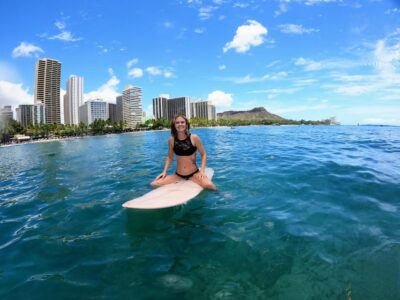
Waikiki Beginner Private Surf Lesson- Female Guide
Read our review →
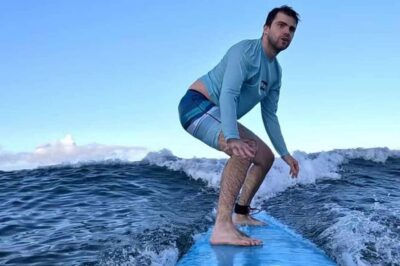
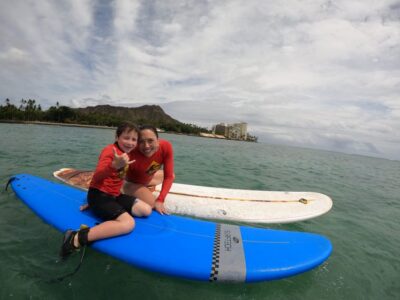
Browse the lists this tour appears in