Reviewed · TICKETS
Bishop Museum General Admission Ticket
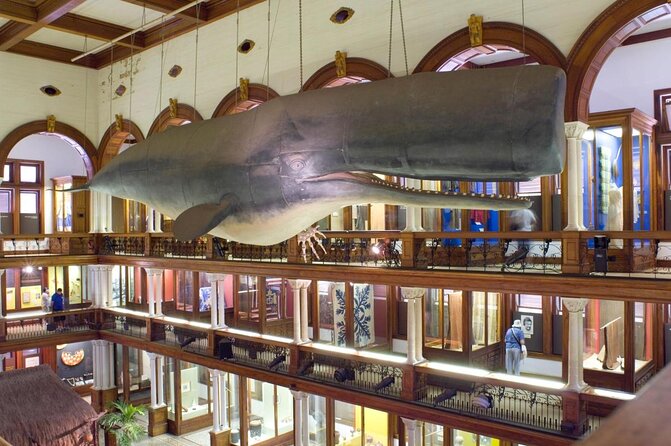
Bishop Museum gives you the clearest single place in Honolulu to connect Hawaiian culture with the wider story of Polynesia. Its carved halls, royal objects, migration displays, astronomy programs, and volcano science exhibits turn a museum visit into a lesson about how people found, settled, and cared for these islands. I especially like the Hawaiian Hall Complex and the Pacific migration displays, which put Hawaiian traditions in a much larger oceanic setting.
I also like the Richard T. Mamiya Science Adventure Center, particularly if you are visiting with children or anyone who prefers hands-on learning. The planetarium can add a memorable look at traditional Polynesian navigation and the skies over Hawai‘i. The main drawback is simple: this is a large campus, and some areas or programs may be closed, so you need time and a little flexibility to get your money’s worth.
Key points to know before you go
- Allow at least half a day: You can see highlights in two hours, but the museum is large and rewards slower visits.
- Start with Hawaiian Hall: Its artifacts, architecture, and displays provide the strongest introduction to Hawaiian culture and history.
- Pacific Hall widens the story: You learn about Polynesian origins, migration routes, settlement, values, and shared traditions.
- Planetarium admission is separate: The astronomy building may require an additional ticket, and show availability can change.
- The science center suits families: Interactive displays explain lava, volcanoes, island formation, and Pacific environments.
- Check what is open: The planetarium, Castle Memorial Building, or lava demonstration may not always be operating.
Why Bishop Museum belongs on your Honolulu plans
Bishop Museum was founded in 1889, and its purpose reaches well beyond a standard collection of old objects. You come here to understand Hawai‘i through its people, beliefs, art, movement across the Pacific, and relationship with the natural world.
That broad approach is the museum’s greatest strength. You can begin with Hawaiian royal objects and traditional crafts, then move to ocean migration, astronomy, volcanoes, and modern efforts to preserve Hawaiian arts. The subjects are different, but they fit together.
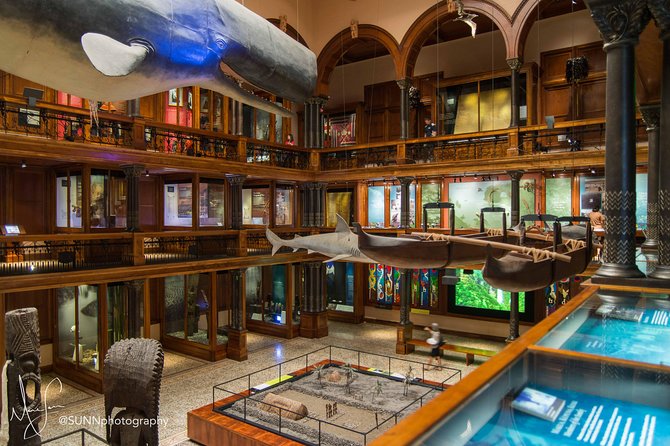
I would not treat this as a quick stop between Waikiki activities. The museum offers enough material for one to eight hours, depending on how closely you read displays and how many programs you add. Two hours can give you a useful overview. A half-day is a better target if you want to see the main halls, science center, and planetarium area without rushing.
The campus also works well on a rainy or uncertain-weather day. Much of the experience is indoors, though the museum advises dressing for all weather conditions. Wear comfortable shoes, since the buildings and grounds require walking.
More museums and galleries in Honolulu:
- Pearl Harbor Aviation Museum Ticket with Audio Tour and Shuttle
★ 4.5 · 58 reviews - Honolulu: Bishop Museum General Admission Ticket
★ 4.7 · 20 reviews
Hawaiian Hall, the museum’s essential first stop
Begin in the Hawaiian Hall Complex. This is the heart of the visit and the place I would prioritize if your time is limited.
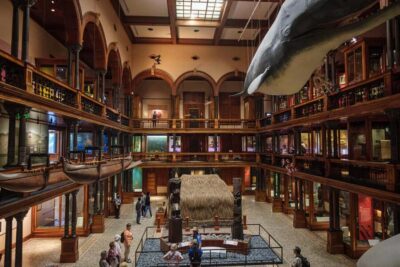
The displays cover Hawaiian history, traditions, material culture, leadership, and daily life. You might spend time looking at carved objects, woven mats, fishing hooks, featherwork, photographs, and preserved examples of traditional arts. The building itself adds to the experience, with ornate woodwork and a formal setting that feels suited to the importance of the collection.
The feathered kahili room is one detail worth seeking out. Kahili were ceremonial standards associated with Hawaiian royalty and status, and the display gives you a direct sense of the care and skill involved in making them.
The museum also presents stories connected with Hawaiian leaders and the people who lived within these traditions. That human focus keeps the collection from becoming a simple parade of objects. You are encouraged to think about what each item meant, who used it, and how it fit into Hawaiian society.
If you enjoy reading every label, plan generously. The museum’s size can surprise you, and a partner who reads at a different pace may want more time than you do. Families can divide the visit by interest, but younger children may find the historical galleries slow if they are not ready for extended reading.
Pacific Hall and the long journey across Oceania
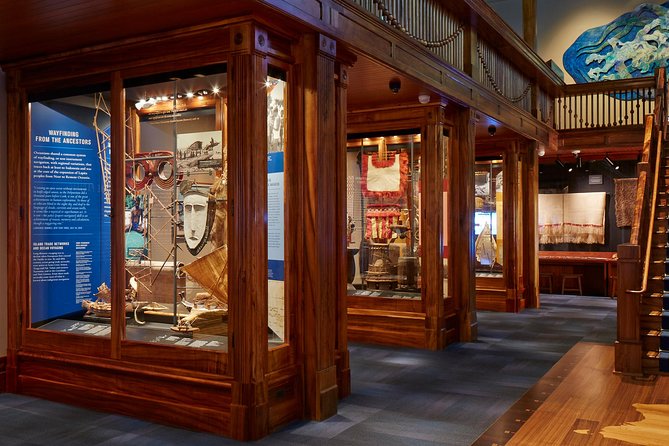
Pacific Hall is especially valuable because it places Hawai‘i within the wider Pacific. Instead of treating the islands as an isolated destination, the displays explain the origins, movements, values, and settlement patterns of Pacific peoples.
Look for the large migration map. It helps explain how populations moved across an immense ocean and why Polynesian cultures share certain traditions while also developing distinct identities. This is one of the most useful parts of the museum for anyone who wants context beyond the beaches and resort districts.
The collection also includes objects connected with fishing, weaving, navigation, and daily life. A display of fishing hooks and woven mats can sound modest on paper, but these objects reveal practical knowledge and design choices passed through generations.
I like this section because it gives you a better way to understand Hawaiian culture. You see that ocean travel was not an accidental side note. It was central to settlement, identity, and survival across the Pacific.
Allow time here even if you are mainly interested in Hawai‘i. The Pacific story is not a detour. It explains how Hawai‘i fits into a much larger network of islands and people.
The planetarium and traditional Polynesian navigation
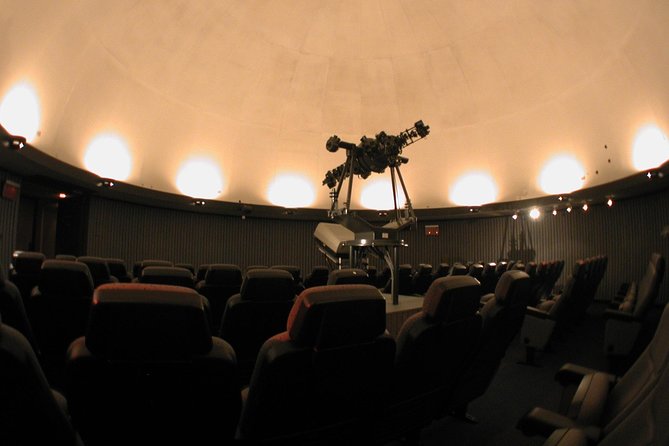
The Jhamandas Watumull Planetarium offers a different kind of cultural lesson. Its programs can show the skies of Hawai‘i and Polynesia and explain how ancient navigators used the heavens to travel across open water.
This is one of the most distinctive parts of the museum because it links science with tradition. You are not only looking at stars as distant objects. You are considering how the sky helped people find direction, recognize patterns, and make long ocean journeys possible.
The planetarium show is optional, so do not assume it is included in the $38.95 general admission price. An additional fee may apply. Show schedules and access can also change, and the planetarium has sometimes been closed or unavailable. Check the current program before you build your day around it.
If a navigation program is running, I would consider adding it, especially if you enjoyed Pacific Hall. The two sections support each other: one explains movement and settlement, while the other helps you understand the practical astronomy behind those journeys.
The waiting area may feel less polished than the main museum buildings, but the subject itself can be a highlight. Families, older children, and anyone interested in astronomy or seafaring traditions are likely to get the most from it.
More tickets and admissions in Honolulu:
- Rock-A-Hula Ticket
★ 4.5 · 448 reviews - Diamond Head Hike Shuttle with Reservation Tickets Included
★ 5.0 · 223 reviews - Diamond Head Hiking Tour with Ticket and Reservation Inclusion
★ 4.5 · 103 reviews - Oahu : Hanauma Bay Admission Ticket+Equipment Rental
★ 4.0 · 84 reviews
Science Adventure Center and the lava demonstration
The Richard T. Mamiya Science Adventure Center shifts the visit from cultural objects to the forces that formed Hawai‘i. Its interactive displays focus on science as it relates to Hawai‘i and Pacific environments.
This is usually the best building for children. Instead of relying mainly on reading, it gives younger visitors things to examine and interact with. Adults can also benefit because the exhibits connect basic science to the islands around you.
The central subjects include lava, volcanoes, and the formation of the Hawaiian Islands. A live lava melting demonstration is listed as part of the experience, but you should treat it as a scheduled feature rather than a guarantee. Demonstrations have not always taken place, and some areas have been closed during visits.
That uncertainty matters if the lava show is your main reason for buying a ticket. The science center remains useful without it, but the value changes when multiple features are unavailable. Check the day’s schedule at arrival and ask staff what is operating.
I would place this building later in the visit if you are traveling with children. Start with a shorter stretch in Hawaiian Hall, then use the science center as a change of pace. It can also rescue a rainy afternoon when outdoor plans have fallen apart.
Castle Memorial Building and changing exhibits
The Castle Memorial Building is used for temporary exhibitions. Its contents can change, so it may offer something new on a return visit or a special subject not covered in the permanent halls.
The benefit is variety. A changing exhibit can add a current or focused topic to the museum’s older collections. The limitation is that its value depends entirely on what is showing and whether the building is open during your visit.
Do not make this building your only reason to come. Treat it as an extra, and check the current exhibition details if a particular display interests you. Some people find temporary areas less rewarding than the main museum, especially when the schedule includes closures.
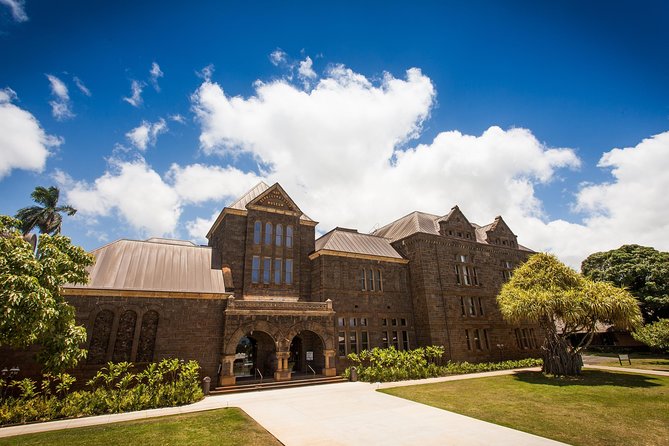
The grounds and architecture are part of the appeal here. Even if a temporary gallery does not hold your attention, the campus gives you a break from dense displays and reading.
How much time should you allow?
The advertised visit can last from one to eight hours, but I would divide the options this way:
- One to two hours: Focus on Hawaiian Hall and a short section of Pacific Hall. This is enough for a useful introduction, not a full visit.
- Three to four hours: Add Pacific Hall, the science center, and time for the buildings and grounds. This is a sensible target for most adults.
- Half a day or longer: Add a planetarium show, a temporary exhibit, and slower reading throughout the main galleries.
The museum can feel overwhelming if you arrive late and try to cover everything. Several sections contain enough text and objects to reward careful attention, so a rushed visit may leave you remembering the buildings more than the ideas.
Go early if you can. That gives you a better chance of fitting in a scheduled planetarium program or science demonstration, and it leaves time for the museum restaurant or other facilities before closing. If you arrive near the end of the day, you may find that food service has stopped even though you still have galleries to see.
Is $38.95 good value?
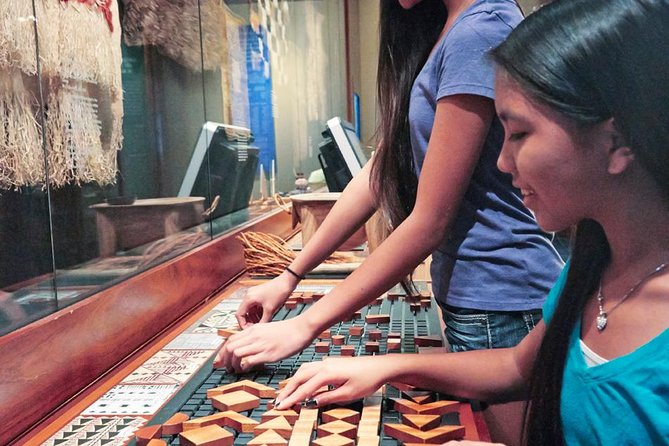
At $38.95 per person, general admission is not a bargain-priced quick attraction. It becomes reasonable when you use the ticket for several hours and visit more than one building.
The value is strongest for you if Hawaiian history, Polynesian culture, astronomy, or volcano science are genuine interests. It is also a practical choice on a rainy day, especially when you want an indoor activity with substance rather than a short photo stop.
The price feels less attractive when major sections are closed or when you only have an hour. Planetarium shows, parking, and special exhibits can also cost extra, so budget for those separately if they matter to you.
One important comparison: check the current admission price and daily offers before booking. The museum’s own reception may sometimes have a lower price or a special admission day than a third-party booking site. A prepaid ticket can be convenient, but it may be nonrefundable close to the visit date. You should compare the final price before committing.
Practical details that affect your visit
The ticket is mobile, and confirmation is provided at booking. The experience is offered in English, and the museum is near public transportation. Parking is optional and may cost extra.
You should expect a moderate amount of walking across a large museum campus. Comfortable footwear matters more here than dressing for a formal cultural attraction. Service animals are allowed.
General admission does not automatically include the planetarium show or special exhibits. Ask what is included on the day you arrive, particularly if a live lava demonstration or a temporary gallery is important to you.
The stated policy allows free cancellation up to 24 hours before the experience start time. Within 24 hours, changes and refunds are not accepted. The policy also says that if the experience is canceled because of poor weather, you will be offered another date or a full refund.
Who will enjoy Bishop Museum most?
I would recommend this experience to adults who want context for Hawaiian culture rather than a quick list of facts. It also suits families, especially when children can spend time in the interactive science center.
Teenagers may appreciate the chance to explore at their own pace. Couples who enjoy museums should allow more time than they first expect, especially if one person likes to read every caption.
The museum is less suitable if you want a short, tightly scheduled attraction or if you are buying mainly for one program that may not be operating. It can also be a lot for very young children if you spend the whole visit in the historical galleries.
The best approach is to choose two or three priorities before arriving. I would select Hawaiian Hall, Pacific Hall, and the science center, then add the planetarium or changing exhibit if available.
Should you book the Bishop Museum ticket?
Book it if you want to understand Hawai‘i through culture, Pacific migration, traditional arts, astronomy, and geology in one visit. The strongest material is in Hawaiian Hall and Pacific Hall, while the science center adds variety and works particularly well for children.
Give yourself at least three hours, and preferably half a day. Check closures, planetarium times, lava demonstrations, and the direct admission price before buying. If the main buildings and programs are operating, $38.95 can be fair value. If several areas are closed and you have limited time, waiting or buying directly may make more sense.
FAQ
What does the Bishop Museum general admission ticket include?
It includes admission to Bishop Museum and its main exhibit spaces, including Hawaiian Hall, Pacific Hall, the Richard T. Mamiya Science Adventure Center, and the Castle Memorial Building when open.
Is the planetarium show included?
No. The planetarium show is optional and is not included in general admission. A separate fee may apply.
Is parking included?
No. Parking fees are optional and are not included in the admission ticket.
How long does a visit to Bishop Museum take?
The visit can take about one to eight hours. Two hours is enough for a short overview, while at least half a day is better if you want to see the main buildings and read the exhibits carefully.
Is Bishop Museum suitable for children?
Yes. The science center offers interactive learning focused on lava, volcanoes, island formation, and Pacific environments. Younger children may find some of the historical galleries less engaging.
Is the museum open in all weather?
The experience operates in all weather conditions, and you are advised to dress appropriately. The cancellation policy says that if the experience is canceled because of poor weather, you will be offered another date or a full refund.
Can I cancel the ticket for a refund?
Yes, if you cancel at least 24 hours before the experience start time. Cancellations or changes made less than 24 hours in advance are not refunded.
Newest Honolulu write-ups
- Waikiki: Turtle Canyon Snorkel Tour with Small Group★ 3.4 · 5 reviews
- Waikiki: Surf Lessons Easy 60 min classes no crowds!★ 4.9 · 21 reviews
- Waikiki: Snorkeling & Ocean Playground Experience★ 4.4 · 57 reviews
- Waikiki: Waikiki Night Marchers Ghostly Walking Tour★ 4.9 · 6 reviews
- Waikiki: Sunset Swim & Sailing Experience★ 4.5 · 3 reviews
- Waikiki: Rock-A-Hula Show Ticket and Buffet Option★ 4.5 · 51 reviews
- Waikiki: Sea Turtle Snorkeling, Small Group Boat Tour★ 5.0 · 14 reviews
- Waikiki: Family, Private, and Group Surfing Lessons★ 5.0 · 4 reviews
Tickets, compared.

Diamond Head Hike Shuttle with Reservation Tickets Included
Read our review →
Diamond Head Hiking Tour with Ticket and Reservation Inclusion
Read our review →

Pearl Harbor Aviation Museum Ticket with Audio Tour and Shuttle
Read our review →