
Reviewed · HISTORICAL TOURS
History & Culture Tour in Honolulu via Segway
Honolulu’s past comes into focus quickly on this 2.5-hour Segway tour, which links royal landmarks, old commercial streets, Chinatown, the harbor, and the oceanfront. You cover far more ground than on foot, yet still pause at places tied to Hawaii’s monarchy and political history.
I like the small group limit of eight and the headsets, which let you hear the guide without stopping every few minutes. I also like the mix of serious sites and open-air riding, from Kawaiahao Church and Iolani Palace to surfers at Point Panic. The main consideration is price: at $254.14 per person, this is a costly city tour, especially once you add the optional Waikiki transfer and guide gratuity.
Key points to know before you book
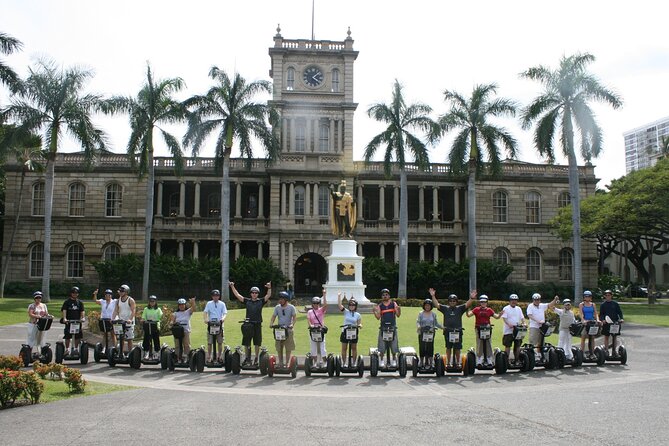
- Royal Honolulu is the focus: You visit Kawaiahao Church, Iolani Palace, the King Kamehameha Statue, Queen Liliuokalani’s statue, and the State Capitol.
- A maximum of eight people: The small group gives your guide room to answer questions and adjust the pace.
- Headsets keep the history flowing: Your guide uses a two-way radio system, so you can listen while riding.
- The route reaches Chinatown and the harbor: This is more than a palace tour, with old streets, markets, waterfront sights, and restored coral reef areas.
- The ride begins in Kakaako: Meet at Segway of Hawaii, StoreKeeer Building, 1687 Kalauokalani Way, at 9:00 a.m.
- Waikiki pickup costs extra: Round-trip transportation from one of four Waikiki pickup points costs $20 per person.
Why a Segway works well for historic Honolulu
Honolulu’s important sights are spread across several districts. Walking from the Mission Houses to Iolani Palace, Chinatown, Honolulu Harbor, and Kakaako Waterfront Park would take much longer and require more effort. A Segway lets you connect these places in one morning without turning the outing into a long hike.
I like this format for visitors who want context but do not want to spend the whole day inside museums. You get the buildings, statues, streets, and waterfront views, then move on before any one stop begins to feel heavy.
The route also shows how Honolulu changed over time. You move from the first Christian mission and royal government to modern civic buildings, old commercial streets, international Chinatown, and the working harbor. The ride helps you see those pieces as part of one city rather than separate attractions.
The guides use colorful helmets, bottled water, headsets, and two-way radios. The radio matters more than it may sound. Honolulu has traffic, open streets, and busy public areas, so being able to hear Jeanne, Michael, Zach, or another guide while moving keeps the tour from becoming a series of silent rides followed by rushed speeches.
More segway tours in Honolulu:
- Honolulu: Diamond Head Segway Tour
★ 5.0 · 37 reviews - Honolulu: Magic Island & Beach Segway Tour
★ 5.0 · 10 reviews - Honolulu: Historic Downtown Segway Tour
★ 5.0 · 6 reviews
Mission Houses and Kawaiahao Church
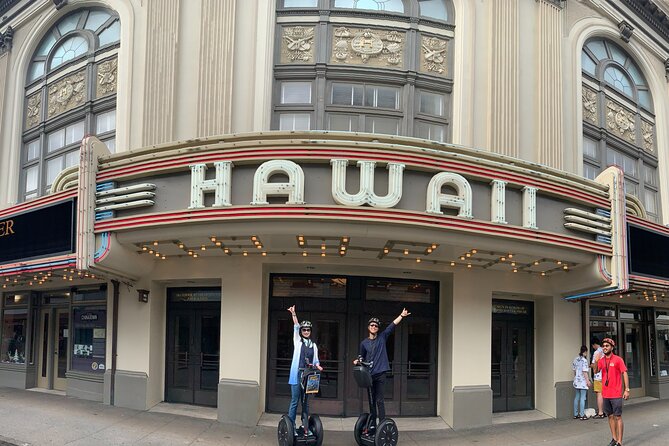
The first stop brings you to the Mission Houses, a small group of austere buildings dating to 1820. These are tied to Hawaii’s first missionaries and give you an early look at the period when foreign religious and political influence began to take hold.
Next door is Kawaiahao Church, also built in 1820. Its graveyard includes former Aliʻi, or Hawaiian royalty. That makes the stop more than a quick photo opportunity. You are looking at a place connected to both religious change and the Hawaiian ruling class.
Across King Street, you can also see Honolulu Hale, the city hall. It adds a civic note to the opening part of the ride and helps frame the area as the historic center of government and public life.
I would pay close attention here, especially if you care about Hawaiian culture and the shift from an independent kingdom to a society shaped by outside institutions. The buildings are restrained rather than flashy, so the guide’s explanation is important. The visit works best as a story about change, not simply as a collection of old structures.
King Kamehameha and Hawaii’s royal government
The ride continues to the gold-covered King Kamehameha Statue in front of the Hawaii State Supreme Court building. It is one of three King Kamehameha statues in the world, and its location is significant: the building behind it was once the seat of Hawaii’s government when Hawaii was still a nation.
This stop gives you one of Honolulu’s most recognizable images, but the setting adds useful context. The statue is not isolated from history. It sits in a civic district shaped by the monarchy, later government, and the legal system that followed.
From here, you cross King Street to Iolani Palace and the Royal Barracks. Iolani Palace is the only palace on American soil built by a king. Today it operates as a museum, although this Segway outing focuses on riding around the grounds rather than an extended interior visit.
You glide around the palace, taking in banyan trees and stopping at the Queen Liliuokalani Statue. She was Hawaii’s last ruling monarch, and her story is central to understanding the overthrow of the Hawaiian government by Americans.
This is one of the strongest parts of the tour for anyone interested in the monarchy. The palace grounds give you a physical sense of the setting, while the guide connects the royal family to the political events that ended the Hawaiian Kingdom. If you want a detailed palace interior visit, you would need to arrange that separately. Here, the strength is the broader route and the outdoor perspective.
The State Capitol and the changing center of Honolulu
Behind Iolani Palace, the route reaches the Hawaii State Capitol Building. Its architecture is distinctive, and its location creates a clear contrast with the nearby palace. In just a short distance, you see the former royal seat and the modern seat of state government.
I like this part because it keeps the tour from treating Hawaiian history as something frozen in the past. The ride shows the continuing role of these central Honolulu blocks, even as the government and political system changed.
You also pass the Hawaii State Art Museum before heading along historic Hotel Street. Hotel Street has a colorful past and leads toward Chinatown. This stretch gives the tour a different mood from the formal palace grounds. Instead of royal symbols and government buildings, you see an older commercial part of the city.
More history tours in Honolulu:
- Oahu: Mauka Warriors Luau Honoring Polynesia’s Forgotten History
★ 5.0 · 3,013 reviews - Pearl Harbor with USS Arizona and Hawaiian Kingdom History Tour
★ 4.5 · 184 reviews - Pearl Harbor [Early Access], USS Arizona & Historic Honolulu Tour
★ 4.5 · 87 reviews - Semi Private Honolulu Historical Tour
★ 5.0 · 11 reviews
Chinatown, Merchant Street, and Honolulu’s working past
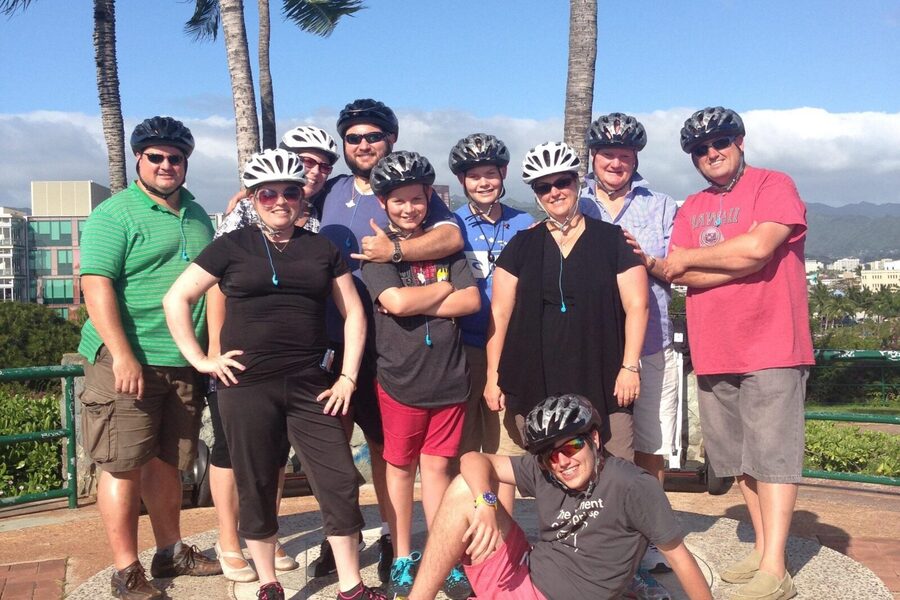
Chinatown’s shopping mall area brings open markets, noodle factories, and a mix of people from around the world. The tour does not present Chinatown as a polished historic set piece. It offers a glimpse of a working district where food production, commerce, and daily life remain part of the scene.
You then head toward Bishop Street, described as Honolulu’s Wall Street, along Merchant Street, one of the city’s first paved streets. The buildings here show another stage of Honolulu’s growth, when shipping, banking, trade, and transportation helped shape the city.
The route also includes historic transportation buildings more than 150 years old. These details are easy to miss when you are driving around Honolulu in a car. On a Segway, you move slowly enough to look up, notice facades, and hear why a particular street mattered.
This section is especially useful if you have already seen Waikiki and want a view of Honolulu beyond hotels and beaches. It is also where the small group and headset system pay off. You can keep moving while the guide points out details that would be difficult to hear in a large group.
Honolulu Harbor and the Aloha Tower
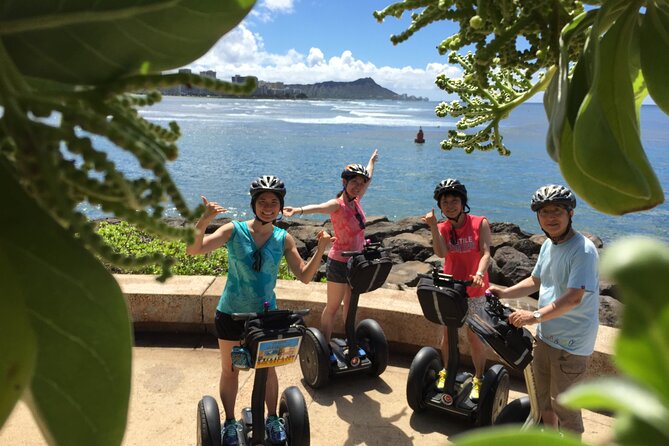
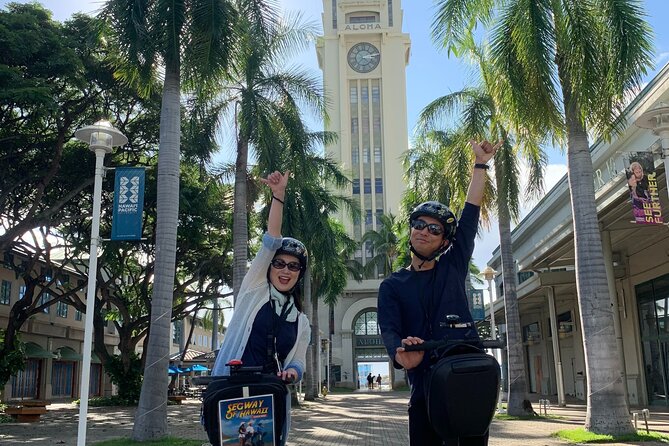
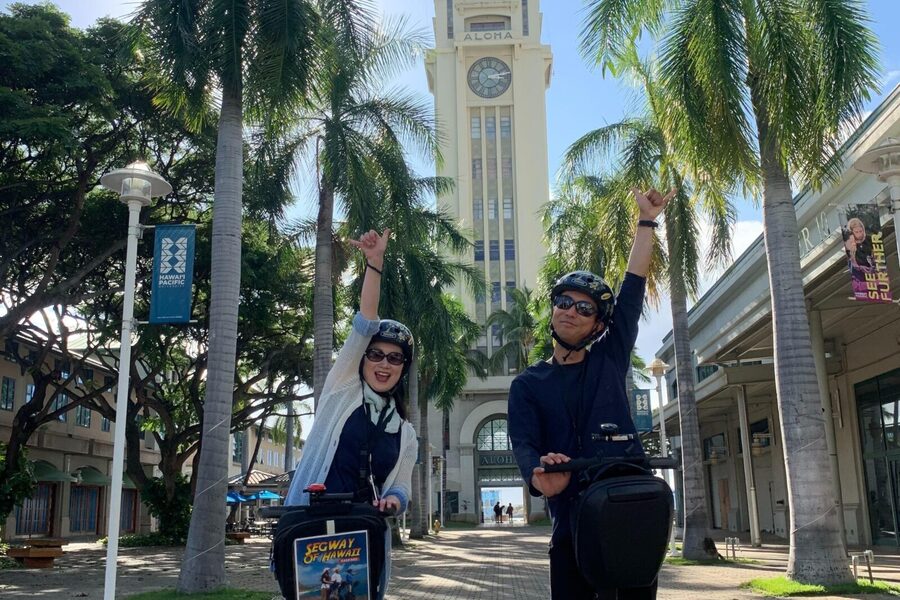
At Honolulu Harbor, the tour reaches Aloha Tower. When it was built in 1926, it was the tallest building in Hawaii. The tower was an important arrival point for people reaching the islands by sea, so this stop ties Honolulu to travel, shipping, and the wider Pacific.
The harbor section also includes a restored coral reef area and fish that come close to feed. That adds a touch of nature to a route otherwise focused on buildings and public spaces. It also gives you a short change of pace before the ride turns back toward the oceanfront.
This is one of the tour’s most appealing contrasts: you are using modern electric transport to follow the outline of an older port city. The route shows how Honolulu’s importance grew through ships, trade, government, and immigration, not just through tourism.
Kakaako Waterfront Park and the oceanfront return
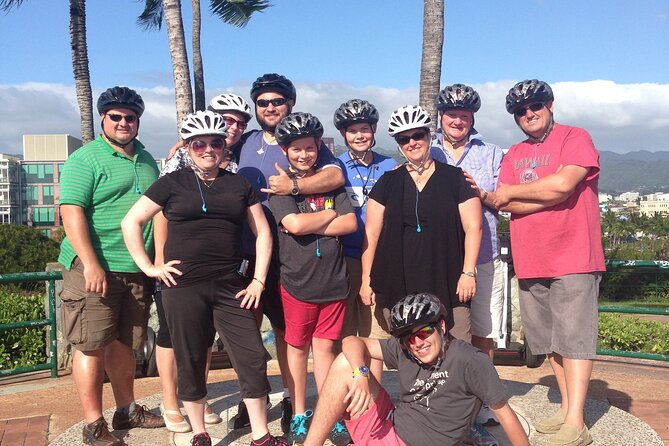
The ride continues toward Kakaako Waterfront Park, with its promenade and views toward surfers at Point Panic. The open space feels different from downtown’s streets and formal civic blocks. You have room to look outward, take photographs, and enjoy the water.
The route also climbs to the Ehime Maru Memorial and the Echo Stone. These are quieter sites, and the stop adds another layer to the city’s relationship with the Pacific. The supplied itinerary ends abruptly after mentioning the Echo Stone, so exact timing at these stops may vary.
The final stretch follows the ocean through Ala Moana Regional Beach Park back to the starting point. It is a pleasant way to finish because the tour ends with space, water, and a change from the dense historic core.
Do not expect a secluded beach ride. This is still an urban route, and the oceanfront section is part of a larger public park. The value is the change in scenery and the chance to finish the morning outdoors rather than returning through the same downtown streets.
Guides, group size, and the first Segway ride
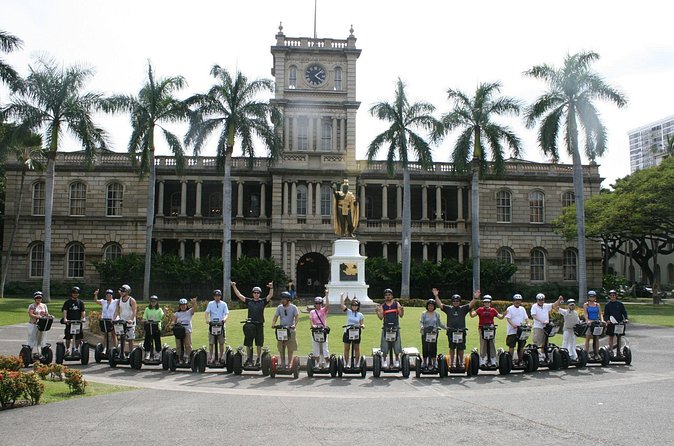
Guide quality matters on a history tour, and this operator has several named guides associated with the experience. Jeanne is praised for answering detailed questions and bringing information that many visitors would not find on their own. Michael is described as entertaining and helpful with photographs, while Zach is noted for making a first Segway ride feel comfortable. Allen and Jeanne have also tailored the route and commentary for families.
Those details suggest a tour that depends heavily on the person leading it. That is normal for a small, story-driven outing. Ask questions as you go, especially at the Mission Houses, Iolani Palace, and the statue of Queen Liliuokalani.
You do not need prior Segway experience according to the supplied tour feedback. People riding for the first time have picked it up quickly with guide support. Still, a Segway requires balance and attention, so you should be honest with yourself about your comfort on a moving device. The official information says most people can participate, but it does not provide a detailed list of physical requirements.
The maximum group size is eight. That is a real advantage over a large bus tour. You are less likely to lose the guide’s commentary, and there is more room for questions. A small group also makes it easier to keep everyone together on a single-file ride through city streets.
Price, transfers, and practical planning
The listed price is $254.14 per person for about two and a half hours. That is expensive for a Honolulu sightseeing activity, so the value depends on what you want from the morning.
You are paying for a private-feeling small group, a guide, radio communication, bottled water, helmets, and a route covering a large area. If you tried to see the same districts on foot, you would spend more time and energy getting between them. If you mainly want a quick beach ride, however, this tour is not a good use of that price. Its purpose is history and city context.
The meeting point is Segway of Hawaii at the StoreKeeer Building, 1687 Kalauokalani Way in Kakaako. The tour starts at 9:00 a.m. and returns to the same location. If you are staying in Waikiki, four pickup locations are available for an additional $20 per person round trip. Contact Segway of Hawaii Kakaako to arrange that transfer.
Plan for the extra cost of gratuity, which is not included and is appreciated by the operator. The experience is offered in English and includes a mobile ticket. It is also near public transportation, though no specific route or fare information is provided.
The tour depends on good weather. If poor weather cancels it, you can choose another date or receive a full refund. You can also cancel for a full refund up to 24 hours before the start time. Cancellations or changes made less than 24 hours before departure are not refunded or accepted.
Who should book this Honolulu Segway tour?
I would choose this for a first or second visit to Oahu if you want a fast introduction to Honolulu’s political and cultural center. It suits history-minded visitors, families who prefer riding to walking, and anyone with only a few hours for downtown.
It is also a good choice if you have taken Segway tours elsewhere and already know you enjoy the format. The route is longer and more substantial than a simple neighborhood ride, and the guide commentary is central to the experience.
I would hesitate if you want a slow museum visit, a quiet beach outing, or a low-cost way to see the city. The palace interior is not the main event, and the price is high. You should also allow time to reach Kakaako if you are staying in Waikiki, unless you pay for the transfer.
For the right visitor, the tour’s strongest feature is its range. In one morning, you connect missionary-era buildings, Hawaiian royalty, the overthrow of the monarchy, modern government, Chinatown, old trade streets, the harbor, and the oceanfront. That is a lot of Honolulu in a small package.
FAQ
Where does the tour begin?
It begins at Segway of Hawaii in the StoreKeeer Building, 1687 Kalauokalani Way, Honolulu, HI 96814.
What time does the tour start?
The tour starts at 9:00 a.m.
How long does the experience last?
The tour lasts approximately 2 hours and 30 minutes.
Where does the tour end?
It ends back at the Kakaako meeting point.
How many people can join the tour?
The maximum group size is eight travelers.
Is transportation available from Waikiki?
Yes. Round-trip transportation from one of four Waikiki pickup locations is available for $20 per person. You need to contact Segway of Hawaii Kakaako to schedule it.
Is the tour offered in English?
Yes. The experience is offered in English.
What is included in the tour price?
The price includes bottled water, a tour guide, a colorful helmet, and a two-way radio headset.
What happens if bad weather cancels the tour?
You can choose a different date or receive a full refund if the operator cancels because of poor weather.
Newest Honolulu write-ups
- Waikiki: Turtle Canyon Snorkel Tour with Small Group★ 3.4 · 5 reviews
- Waikiki: Surf Lessons Easy 60 min classes no crowds!★ 4.9 · 21 reviews
- Waikiki: Snorkeling & Ocean Playground Experience★ 4.4 · 57 reviews
- Waikiki: Waikiki Night Marchers Ghostly Walking Tour★ 4.9 · 6 reviews
- Waikiki: Sunset Swim & Sailing Experience★ 4.5 · 3 reviews
- Waikiki: Rock-A-Hula Show Ticket and Buffet Option★ 4.5 · 51 reviews
- Waikiki: Sea Turtle Snorkeling, Small Group Boat Tour★ 5.0 · 14 reviews
- Waikiki: Family, Private, and Group Surfing Lessons★ 5.0 · 4 reviews
Historical Tours, compared.
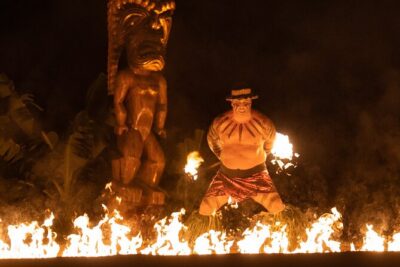
Mauka Warriors Luau Honoring Polynesia’s Forgotten History
Read our review →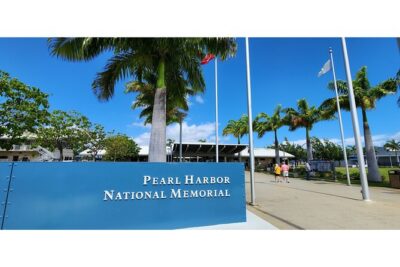
Pearl Harbor with USS Arizona and Hawaiian Kingdom History Tour
Read our review →![Pearl Harbor [Early Access], USS Arizona & Historic Honolulu Tour](https://a.exploringhonolulu.com/wp-content/uploads/pearl-harbor-early-access-uss-arizona-historic-honolulu-tour-400x267.jpg)
Pearl Harbor [Early Access], USS Arizona & Historic Honolulu Tour
Read our review →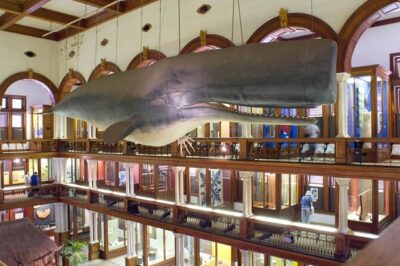
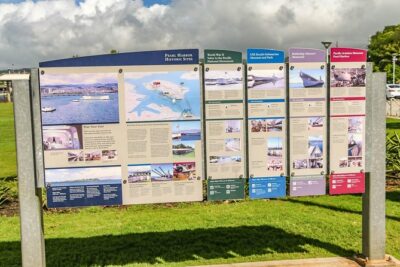
Best Of Pearl Harbor: USS Arizona Memorial & Historic Honolulu
Read our review →
Arizona Memorial & Historic Honolulu City Tour from Waikiki Area
Read our review →
Premier Pearl Harbor and Hawaii Kingdom History Tour
Read our review →Browse the lists this tour appears in